
The Bannerbear and Placid Alternative With No Templates to Maintain
Pick Bannerbear or Placid when you need the same layout rendered thousands of times with dynamic fields, or video. Pick Canvora when you'd rather your agent describe what it needs and get a finished, on-brand design back, without building and maintaining a template for every format.
The short answer
Choose Bannerbear or Placid if your app or agent must render the same approved layout thousands of times from data, or render video, at a low cost per image. Choose Canvora if your agent should just describe the content and get a finished, on-brand design in any of 100+ formats. Bannerbear starts at $49/month and Placid at $19/month; Canvora has credit packs from $10 with no subscription.
By Canvora · Updated November 6, 2026
| Feature | Canvora | Bannerbear & Placid |
|---|---|---|
| Best for | Agents that need designs without templates | Fixed-layout images and video at volume |
| Starting price | Free credits; packs from $10; plans from $19/month | Bannerbear $49/month; Placid $19/month |
| How a request works | Describe content, name a brand kit and format | Design a template, then send field data |
| Output | 100+ formats: posts, carousels, decks, documents | Images, PDFs and video from your templates |
| Languages | 150+, typeset natively | Renders the text you send |
| API and MCP | REST API and MCP server (16 tools) | REST API and MCP on both |
Bannerbear & Placid vs Canvora: feature by feature
See exactly how Canvora compares. We're transparent about where we excel and where Bannerbear & Placid might be better.
| Feature | Canvora | Bannerbear & Placid | Edge |
|---|---|---|---|
| Setup | No template to build. Your agent describes the content, names a brand kit and a format, and gets a designed visual | Design each template first in their editor, then map the fields your app or agent will fill | Canvora |
| Identical Layout Every Time | Generative design: each run is designed fresh. Style presets keep the look consistent across runs, but layouts still vary | Pixel-identical output from a fixed template, which is exactly what some brands need | Bannerbear & Placid |
| Dynamic Data at Scale | Good for campaign-sized sets and one-off requests | Built to render thousands of variations from a spreadsheet, database or product feed | Bannerbear & Placid |
| Video | No video; still images, carousels, decks and documents | Video rendering from templates (titles, overlays, subtitles) on both | Bannerbear & Placid |
| Range of Deliverables From One API | 100+ formats from one call pattern: posts, carousels of up to 15 slides, slide decks, documents, infographics, ads, thumbnails and website visuals incl. transparent PNGs | Whatever you've built templates for: images, multi-page PDFs and video | Canvora |
| Languages | Typeset natively in 150+ languages, and a finished set can be localized while keeping the design | Render the text you send; translation is up to you, and text shrinks to fit the template's boxes | Canvora |
| Brand Consistency | Name a brand kit once (colors, fonts, logo) and it applies to every format the agent asks for | The brand lives inside each template; responsive templates cover extra sizes, but each new layout means designing another template | Canvora |
| Changes by Instruction | The agent can revise its own output: 'make the headline bigger', 'darker background', or localize the finished set | Changes happen by editing the template or the data you send | Canvora |
| Integrations | MCP server and REST API; works from ChatGPT, Claude, n8n, Zapier and anything that can make an HTTP request | Mature no-code integrations: Zapier, Make, Airtable, n8n and more, plus forms, a Placid GPT for ChatGPT, and Placid's embeddable Editor SDK on higher tiers | Bannerbear & Placid |
| MCP for AI Agents | 16 tools: plan, generate, edit, localize, export and check credits | Both offer MCP; Bannerbear's can also build templates and workflows | Similar |
| Cost per Image at Volume | 10 credits per visual, 15 per carousel or deck slide; packs from $10 for 450 credits | Template renders cost a fraction of that per image on higher tiers | Bannerbear & Placid |
5
Canvora Leads
1
Similar
5
Bannerbear & Placid Leads
One short note, no template: what Canvora designed
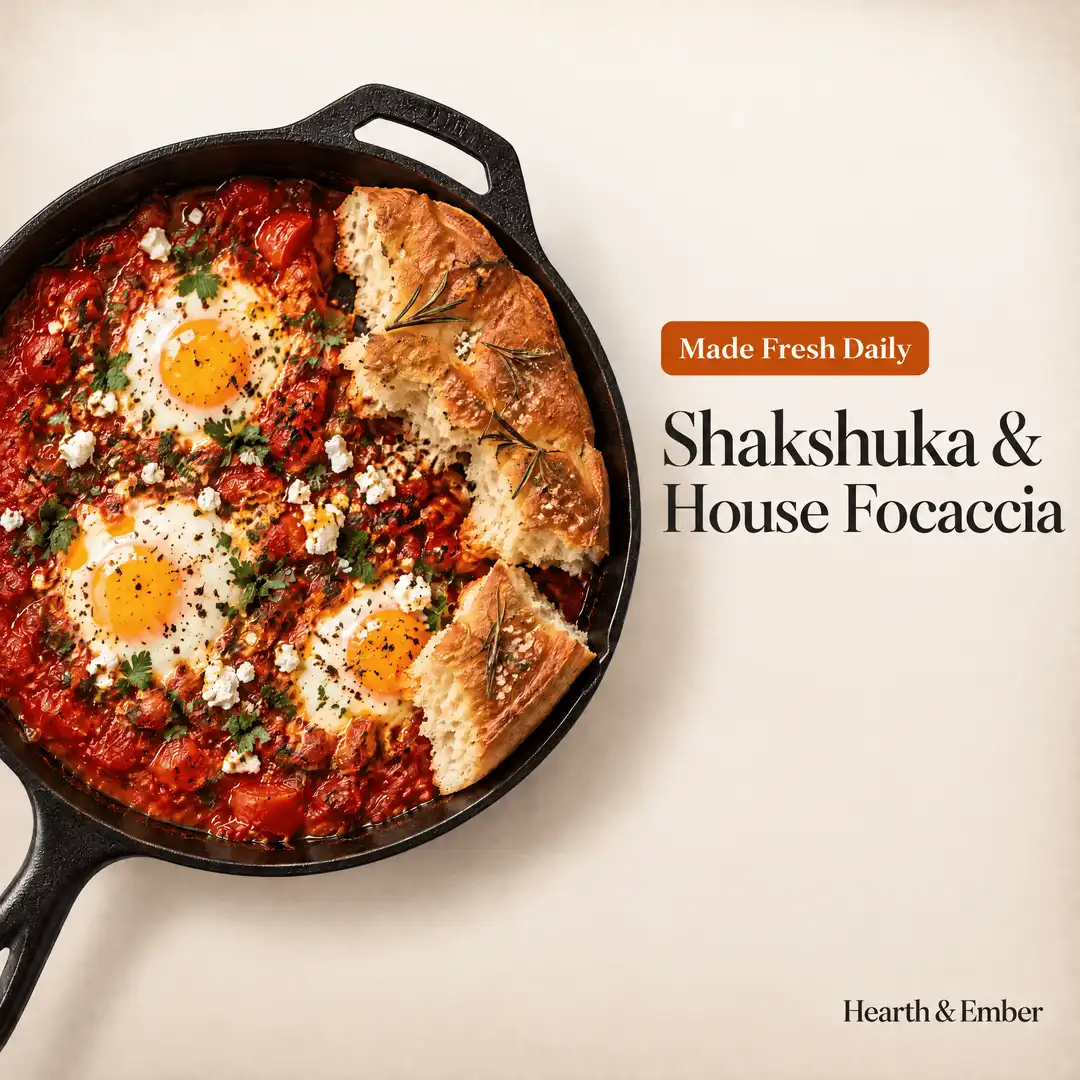
A fictional bakery, Hearth & Ember, announcing weekend brunch. One short note plus a brand kit became every piece below, with no template designed first. The same request works through the MCP server or the REST API. Real Canvora outputs, not mockups.

Transparent website visual
A transparent PNG of the three brunch dishes, ready to drop onto a website section. Nothing to set up: ask for the format and Canvora designs it.

Instagram post
Headline, photography, hours and wordmark in the brand's colors and fonts, from the brand kit.

Carousel cover
The first slide of a carousel from the same note. The carousel slides had small chat edits afterwards.
Carousel slide
A different layout inside the same carousel, still clearly the same brand. A template API would need a separate template for this.

Story
The 9:16 story version of the same announcement, recomposed for a tall screen rather than cropped.

Printable flyer
The full menu, hours and booking line as a flyer, from the same note.
Which is best for what?
Quick picks by use case. Where Bannerbear & Placid is the better choice, we say so.
Best for pixel-identical layouts from a data feed: Bannerbear & Placid
Bannerbear and Placid render the same template with new text and images every time, which suits product feeds, listings and strict brand layouts.
Best for video rendering through an API: Bannerbear & Placid
Both render video from templates, with titles, overlays and subtitles. Canvora makes still images, carousels, decks and documents only.
Best for the lowest cost per image at high volume: Bannerbear & Placid
On higher tiers a template render costs a fraction of a Canvora visual, which uses 10 credits.
Best for agents that need designs without maintaining templates: Canvora
Your agent sends a description, a brand kit and a format name and gets a finished design on a CDN URL. Nobody designs or maps a template first.
Best for many kinds of deliverable from one API: Canvora
The same call pattern returns posts, carousels of up to 15 slides, slide decks, documents, infographics, ads and transparent website visuals.
Best for multilingual output from an agent: Canvora
Canvora typesets natively in 150+ languages and can localize a finished set while keeping the design. With a template API, you translate the text yourself and it has to fit the fixed layout.
Pros and cons
Canvora
Pros
- No templates to build or maintain
- 100+ formats from one MCP server and REST API
- 150+ languages typeset natively
- Agents can revise and localize their own output
- Style presets give an agent a consistent look without templates
Cons
- Layouts vary from run to run
- No video rendering
- Higher cost per image than template renders at volume
Bannerbear & Placid
Pros
- Pixel-identical output from a fixed template
- Built for thousands of renders from data
- Video and multi-page PDF rendering
- Mature no-code integrations, plus MCP
Cons
- Every new layout needs a template designed (resizing covers extra sizes)
- Translation is up to you; long translations can only shrink into a fixed layout
- Bannerbear starts at $49/month
Should you choose Bannerbear & Placid or Canvora?
Both tools have strengths. Here's our honest recommendation.
Recommended
Choose Canvora if you...
- AI agents that need finished, on-brand visuals without anyone designing templates
- Many kinds of deliverable from one API: posts, carousels, decks, documents, infographics
- Brands publishing in several languages
- Small teams and agencies with many brands, each kept in its own brand kit
- Campaign-shaped work, paid for with credit packs instead of a big plan
Alternative
Choose Bannerbear & Placid if you...
- Thousands of images or videos in exactly the same layout
- Product feeds, real estate listings and other data-driven creative
- Brands with strict, pre-approved layouts that must never change
- Video rendering and mature no-code integrations
Bannerbear & Placid vs Canvora pricing
Transparent pricing - no hidden fees
Bannerbear & Placid vs Canvora: common questions
Everything you need to know about choosing between these tools
What is the best Bannerbear alternative?
If you want another template API, Placid is a popular pick and starts lower, at $19/month for 500 credits; Templated is another option with MCP on all plans. If you want to stop building and maintaining templates altogether, Canvora is a different approach: your agent describes what it needs and Canvora designs it, across 100+ formats.
Bannerbear or Placid: which is cheaper?
Placid's entry plan is cheaper: $19/month for 500 credits, against $49/month for 1,000 API credits on Bannerbear's Automate plan (prices checked November 2026). Both offer a free trial without a card, and both include an MCP server.
Is there an API to generate social media images without templates?
Yes. Canvora's REST API and MCP server take a description, a brand kit and a format name (for example Instagram post or LinkedIn carousel) and return finished designs on a CDN URL. There is no template to design first. It works from n8n, Zapier, ChatGPT, Claude and any HTTP client.
Can Canvora render the exact same layout every time like Bannerbear?
No. Canvora is generative, so each run is designed fresh and the layout varies from run to run. Brand kits keep colors, fonts and logo consistent, and exact-text mode keeps your words verbatim, but if you need pixel-identical layouts with dynamic fields, a template API like Bannerbear or Placid is the right tool.
Does Canvora have an MCP server?
Yes. Canvora's remote MCP server signs in with OAuth and exposes 16 tools, including chat, confirm_generation, edit_image, localize_generation and export_visuals. Generation only starts after an explicit confirm step, and every output lands in your Canvora dashboard for review. API and MCP access are available on all plans, including Free.
Does Bannerbear have a free plan?
Bannerbear has a free trial with 30 API credits and no card required, then plans from $49/month. Placid also has a free trial. Canvora gives you free credits to start, then credit packs from $10 (450 credits, valid 12 months).
How much does Canvora cost through the API?
The same credits as the app: 10 per single visual, 15 per carousel or deck slide and 3 per edit. Credit packs are $10 for 450 credits, $25 for 1,200 and $55 for 2,800, valid 12 months; monthly plans are $19, $49 and $99. Failed generations refund their credits automatically.
Can I use Canvora and Bannerbear together?
Yes. Some teams keep a template API for high-volume, fixed-layout images like product cards, and use Canvora for everything that needs fresh design: carousels, decks, campaign posts and documents.
How we compared
We weighed the tools on what developers and AI-agent builders care about most: setup effort, identical layouts at volume, range of formats, languages and cost per image. We checked prices and features on each company's own website in November 2026.
We make Canvora, so read this with that in mind. We've tried to be fair, and the rows above show where Bannerbear & Placid is the better pick.
More Comparisons
Explore how Canvora compares to other tools
Ready to create faster?
Start free with credits to try it, no card needed.
Get Started Free